A veterinary guide to bad breath and dental disease in dogs and cats, by Dr. Rocío Cromstedt Lavigne at TINAVET Marbella.
That familiar kiss from your pet… and the smell you shouldn't ignore.

By Dr. Rocío Cromstedt Lavigne, MRCVS
Veterinary Surgeon & Co-Founder of TINAVET Marbella
There are few things more comforting than coming home after a long day and being greeted by your dog. The wagging tail. The excitement. The unconditional love. And, of course, that enthusiastic kiss right on your face.
But sometimes, just as your dog leans closer, you notice something unpleasant. Their breath smells terrible. You smile, gently turn your head and think: "Well, that's just dog breath, isn't it?"
Or perhaps your cat curls up beside you on the sofa. As they yawn, you notice a particularly strong smell coming from their mouth. You assume it's their food.
But what if that smell is actually your pet's way of telling you that something hurts?
My name is Rocío Cromstedt Lavigne. I'm a veterinary surgeon and, together with my husband Alberto Fernández Jiménez, I founded TINAVET Marbella. During our years practising veterinary medicine in Birmingham, in the United Kingdom, one lesson stayed with me: animals are extraordinarily good at hiding pain. And dental pain is one of the easiest problems for loving owners to miss.
A dog may continue eating despite having infected teeth. A cat may appear perfectly comfortable while suffering from a painful condition beneath the gumline. And sometimes, the first warning sign is simply bad breath.
Today I want to explain why this happens, how you can recognise the warning signs and why looking after your pet's teeth is about much more than fresh breath.
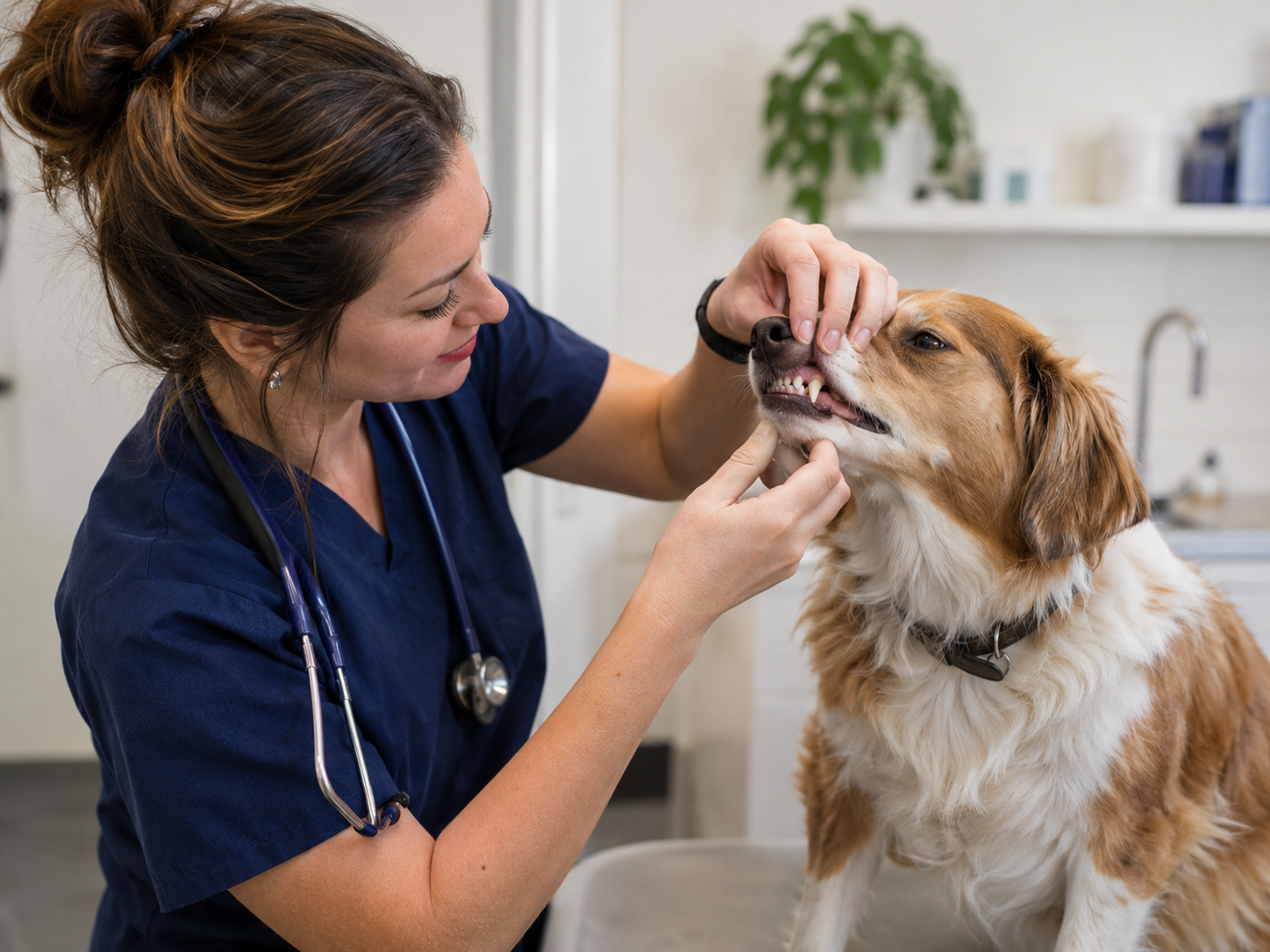
Persistent bad breath in dogs and cats is often the first sign of dental disease. A veterinary dental check can find the cause before it becomes painful.
Is bad breath normal in dogs and cats?
No. Persistent or unusually strong bad breath is not normal in dogs or cats. It is most often a sign of dental or oral disease, and it deserves a veterinary check.
A temporary smell after eating certain foods is not usually a concern. But breath that consistently smells rotten, sour or unusually unpleasant should never be dismissed as simply part of owning a pet.
Veterinarians call persistent bad breath halitosis. And the important message is simple: bad breath is a symptom, not a diagnosis. Understanding its cause is the first step towards helping your pet.
Bad breath in dogs and cats: the key facts
It is not normal. Persistent bad breath is a warning sign, not a harmless quirk.
The most common cause is dental disease: bacteria in plaque and tartar, with gum inflammation or periodontal disease.
It starts early. According to the American Veterinary Medical Association, most dogs and cats show early signs of periodontal disease by three years of age.
Cats are especially affected. Cornell University's Feline Health Center reports that between 50% and 90% of cats older than four have some form of dental disease.
Pets hide dental pain. Many dogs and cats keep eating normally even when their mouth hurts.
It can be prevented. Daily tooth brushing with a pet toothpaste and a veterinary dental check at least once a year make the biggest difference.
What causes bad breath in dogs and cats?
The most common cause is bacterial buildup in the mouth, particularly when plaque and tartar are associated with gum inflammation or periodontal disease.
However, dental disease is not the only possible explanation. Bad breath can also result from:
Food or foreign material trapped in the mouth
Broken or infected teeth
Oral ulcers or other mouth infections
Tooth resorption in cats
Oral tumours
Certain illnesses, including kidney disease and diabetes
How does dental disease start in dogs and cats?
Dental disease is extremely common, and it begins long before a pet is elderly.
Imagine the surface of your own teeth after a day without brushing. A sticky film develops. That film is called plaque, and it contains bacteria that accumulate on the teeth and around the gumline.
If plaque isn't removed, it mineralises into tartar, also called dental calculus. The gums become inflamed. This early stage is called gingivitis, and at this point professional care and good home hygiene can still restore gum health.
But if the inflammation progresses, it damages the tissues and the bone that support the teeth. This is called periodontitis. In advanced cases, teeth become loose, infected or painful and eventually need to be extracted.
What is the difference between plaque, tartar, gingivitis and periodontitis?
Plaque: a sticky bacterial film that continuously forms on the teeth. It can be removed by brushing.
Tartar: hardened, mineralised plaque that normally needs professional removal.
Gingivitis: inflammation of the gums, usually caused by plaque. It is reversible.
Periodontitis: more advanced disease that destroys the tissues and bone supporting the teeth. The damage is permanent.
The most important thing to remember is that serious dental problems can exist below the gumline, even when the visible teeth do not look particularly bad.
What are the signs of dental disease in dogs and cats?
Bad breath is often the first clue. But there are seven warning signs I encourage every dog and cat owner to watch for.
1. Persistent bad breath
A strong, unpleasant smell that returns quickly or never really disappears.
2. Yellow or brown buildup on the teeth
This is visible tartar, particularly near the gums.
3. Red, swollen or bleeding gums
Healthy gums do not routinely bleed. Inflammation may indicate gingivitis or more advanced dental disease.
4. Difficulty chewing
Your dog might begin chewing on one side of the mouth. Your cat may drop food, eat more slowly or suddenly become reluctant to eat dry food.
5. Excessive drooling
Some pets drool more when they have dental pain or oral inflammation. Blood-stained saliva is particularly concerning.
6. Changes in behaviour
A previously affectionate pet might resist having their face touched. A dog may stop enjoying chew toys. A cat may groom less or become unusually withdrawn.
7. Loose, broken or missing teeth
These signs need professional assessment. An adult pet losing a permanent tooth is not a normal consequence of ageing.
One important warning: many pets continue eating even when they are in considerable dental pain. Never assume that because your dog finishes dinner or your cat still eats, their teeth must be healthy.
A real case: Ferris, the dog whose bad breath was hiding something serious
I want to share a documented veterinary case that shows why dental problems should never be underestimated.
Ferris was a senior dog referred to Advanced Animal Dentistry, a veterinary dental referral service in Australia. His family had noticed several changes: his breath was becoming increasingly unpleasant, he was chewing differently, apparently avoiding certain teeth, and there was swelling around part of his muzzle.
What initially seemed like a simple dental problem turned out to be much more advanced. The veterinary team found advanced periodontal disease, infected tissues and openings between the mouth and the nasal cavity on both sides, known as oronasal fistulae. These can develop when severe periodontal destruction affects the tissues separating the mouth from the nose.
Ferris also had a heart murmur, so the team carried out an additional cardiac assessment before proceeding with anaesthesia. Dental X-rays revealed the true extent of the disease. The treatment required the extraction of twelve teeth and surgical repair of the fistulae.
Fortunately, Ferris recovered well. At his two-week follow-up his surgical sites had healed, and he was able to return to his normal diet and activity. His family also received guidance on dental hygiene at home.
Ferris' story is publicly documented by Advanced Animal Dentistry.
What can we learn from Ferris?
Bad breath can be a sign of advanced disease, not simply an unpleasant smell.
Looking at the teeth is not enough. A visual examination alone cannot always reveal the full extent of dental damage.
Age alone is not a barrier. Older pets can often have necessary dental treatment safely, with an individual assessment and careful anaesthetic planning.
His case is a reminder that waiting until a pet is clearly suffering can allow a treatable problem to become much more complicated.
Why is dental disease in cats so hard to recognise?
Cats are remarkable animals. They are independent, affectionate in their own way and exceptionally skilled at disguising discomfort.
A cat with a painful tooth may still jump onto the sofa. They may still purr. They may even continue eating normally. This makes feline dental disease particularly difficult for owners to recognise, even though it is very common.
What is tooth resorption in cats?
Tooth resorption is a condition in which the hard structures of a tooth gradually break down. According to Cornell University's Feline Health Center, it is the most common cause of tooth loss in cats, and between 30% and 70% of cats show some sign of it.
It may affect one tooth or several. Some lesions are clearly visible near the gumline, while others are hidden and need dental X-rays to be detected.
Tooth resorption can be extremely painful. Affected teeth frequently need to be extracted, although the right treatment depends on the type and extent of the lesion.
A real case: a cat with bad breath and hidden dental damage
A clinical report published by a veterinary clinic in Sofia, Bulgaria, describes a six-year-old neutered male cat brought in because of unpleasant breath.
The cat was otherwise in good physical condition. But on examination, the veterinarian found gum inflammation, missing teeth, loose teeth, exposed roots and evidence of tooth resorption. The cat was treated under general anaesthesia, including the extraction of the affected teeth.
You can read the published veterinary case here.
The lesson I want you to remember is this: your cat doesn't have to stop eating to be suffering from dental pain. That is why regular veterinary dental examinations are so important.
Can bad breath be a sign of kidney disease or diabetes?
Sometimes, yes. Dental and oral problems are by far the most common causes of persistent bad breath, but certain illnesses can change the smell of your pet's breath.
Kidney disease
In some pets with advanced kidney disease, the breath develops an ammonia-like or urine-like smell. Other signs may include increased thirst, changes in urination, weight loss, reduced appetite, vomiting and tiredness.
Diabetes
Uncontrolled diabetes, particularly when complicated by diabetic ketoacidosis, may cause unusually sweet or fruity-smelling breath. Other possible signs include increased thirst, increased urination, weight loss and weakness.
If your pet has fruity breath together with vomiting, weakness, lethargy or abnormal breathing, seek emergency veterinary care.
A change in breath alone cannot diagnose kidney disease or diabetes. A veterinarian may recommend blood tests and other investigations depending on what the examination shows.
What happens during a veterinary dental examination?
One of the biggest fears owners have is discovering that their pet needs dental treatment. Will it hurt? Will they need anaesthesia? What if they're older? What if they need a tooth removed?
These are reasonable concerns, and I believe every owner deserves clear explanations before making decisions about their pet's care. This is what the process normally looks like.
Step 1. An initial oral examination
The veterinarian checks for visible problems such as plaque and tartar, gum inflammation, broken or discoloured teeth, loose teeth, swelling, oral masses and signs of discomfort.
Step 2. Assessing your pet's general health
Before a dental procedure, we review the patient's medical history and overall condition. Depending on age, health and individual risk, additional tests may be recommended.
Step 3. A full dental examination under anaesthesia
When a complete dental assessment or a professional cleaning is needed, general anaesthesia is normally necessary. It allows the veterinary team to examine each tooth carefully, assess the gumline, protect the airway and carry out treatment without causing pain or distress.
Step 4. Dental X-rays
Some of the most important dental structures are hidden beneath the gums. Dental radiographs allow veterinarians to examine the roots and the supporting bone, and to identify disease that cannot be seen in a simple visual examination.
Step 5. Cleaning and treatment
Depending on the findings, treatment may include professional scaling above and below the gumline, polishing, treatment of periodontal disease, extraction of painful or irreversibly damaged teeth and other oral procedures when indicated.
Step 6. Pain management and recovery
Pain relief, monitoring and aftercare are tailored to each patient. Owners receive instructions about feeding, medication, recovery and future dental care.
The objective is not simply to make teeth look white. It is to make the mouth healthier and more comfortable.
Is anaesthesia-free dental cleaning a good idea?
No. Cleaning the teeth of an awake animal is a cosmetic procedure, not a complete veterinary dental treatment.
This is an important question, because some owners understandably want to avoid anaesthesia. However, awake cleaning cannot reliably assess periodontal pockets, remove disease beneath the gums, take dental radiographs or carry out the necessary treatment. It may make the visible teeth look cleaner while leaving serious disease untreated.
For this reason, professional veterinary guidelines such as those of the American Animal Hospital Association (AAHA) recommend general anaesthesia, airway protection and monitoring for a complete dental cleaning and treatment.
The individual risks and benefits should always be discussed with your veterinarian.
How can I prevent dental disease in my dog or cat?
The good news is that there are practical ways to reduce plaque and keep your pet's teeth healthier.
Brush your pet's teeth regularly
Daily tooth brushing is the most effective home-care measure for controlling plaque. If every day is not possible, brushing several times a week still helps.
Use a toothbrush designed for pets and a toothpaste formulated for dogs or cats. Never use human toothpaste: it is not meant to be swallowed and may contain ingredients, such as xylitol or fluoride, that are unsafe for pets.
Introduce dental care gradually
If your dog or cat has never had their teeth brushed, don't expect them to accept a toothbrush immediately. Start with short, gentle sessions. Let them sniff the brush and taste the toothpaste. Touch the outside of their lips. Gradually introduce the brush, reward cooperation and keep the experience calm and positive.
If your pet seems to be in pain or resists having their mouth touched, arrange a veterinary examination before continuing.
Choose suitable dental products
Some dental diets, chews and products have evidence supporting their effectiveness. Products accepted by the Veterinary Oral Health Council (VOHC) are a useful starting point.
However, dental chews do not replace tooth brushing, or professional care when disease is already present. Avoid very hard objects, which may fracture teeth.
Schedule regular veterinary check-ups
Your pet's teeth and gums should be examined at least once a year, and more often when indicated. Small dogs, older pets and animals with previous dental disease may need closer monitoring.
Don't wait until your pet stops eating
This is perhaps the most important recommendation of all. Painful dental disease can develop silently, and regular examinations help identify problems before they become advanced.
Seven mistakes pet owners commonly make
Assuming bad breath is normal. A consistently unpleasant smell deserves attention.
Waiting for obvious pain. Dogs and cats may continue eating despite serious dental disease.
Believing dry food cleans the teeth. Ordinary dry food does not reliably prevent periodontal disease.
Using human toothpaste. Some of its ingredients can harm pets.
Relying only on dental treats. Treats may help reduce plaque or tartar, but they cannot treat established periodontal disease.
Choosing cosmetic cleaning without anaesthesia instead of a proper dental assessment. The most important dental problems may lie beneath the gumline.
Assuming older pets cannot have dental treatment. Age alone is not a reason to avoid anaesthesia. Individual health, risk assessment and the benefits of treatment are what matter.
When should I take my dog or cat to the vet for bad breath?
Arrange a dental appointment if your dog or cat has:
Persistent bad breath
Visible tartar
Red or bleeding gums
Changes in eating or chewing
Drooling
Broken or loose teeth
Sensitivity around the mouth
Reduced grooming or unexplained changes in behaviour
Seek urgent veterinary attention if your pet has marked facial swelling, uncontrolled bleeding from the mouth, significant trauma, severe pain or difficulty breathing.
If your cat is refusing food, contact a veterinarian promptly rather than waiting several days.
A personal message from Rocío: sometimes love means noticing the little things
When Alberto and I decided to create TINAVET Marbella, we wanted it to be more than a place where animals receive medical treatment.
We wanted to build a veterinary clinic where families feel listened to. Where questions are welcomed. Where complicated medical subjects are explained in language everyone can understand. And where prevention is considered just as important as treatment.
Our animals cannot tell us "My gums hurt", "That tooth is painful when I chew" or "Please help me".
Instead, they give us clues. Sometimes those clues are obvious. But sometimes they're as small as a change in breath, a dropped piece of food, or a cat that no longer enjoys being touched around the face.
As a veterinarian, I believe some of the most important things we do begin with paying attention to those small changes. Because behind every dog or cat we examine there is a family. A family that loves them, that wants to do the right thing and that deserves clear, compassionate and trustworthy veterinary advice.
So the next time your dog gives you a kiss or your cat yawns beside you, pay attention.
Their breath might be telling you something important. And recognising it early could make a real difference to their comfort and wellbeing.
With love,
Dr. Rocío Cromstedt Lavigne, MRCVS
Veterinary dental care in Marbella and San Pedro de Alcántara: how TINAVET Marbella can help
At TINAVET Marbella, Alberto and I believe that preventive veterinary medicine begins with understanding each pet's individual needs.
We are based at Avenida Juan Vargas 5, San Pedro de Alcántara, serving pet owners from Marbella, Guadalmina, Nueva Andalucía, Puerto Banús and the surrounding Costa del Sol. You can read more about our veterinary services.
If your dog or cat has bad breath, visible tartar, red gums or changes in eating habits, a veterinary dental assessment can help identify the cause and the appropriate next steps.
We offer communication in English and Spanish, helping local and international families make informed decisions about their pets' health.
Concerned about your pet's breath or dental health? Contact TINAVET Marbella to request information or arrange a veterinary consultation.
Important: for severe pain, facial swelling, breathing problems or other urgent symptoms, seek prompt care from an available veterinary service. Do not rely on an online contact form.
Frequently Asked Questions About Bad Breath in Dogs and Cats
Why does my dog's breath smell so bad?
Persistent bad breath in dogs is most often caused by plaque bacteria, gum inflammation and periodontal disease. Broken or infected teeth, something trapped in the mouth, oral tumours and illnesses such as kidney disease or diabetes can also cause it. A veterinary examination is the only way to find the cause.
Why does my cat have bad breath?
Cats usually develop bad breath because of gingivitis, periodontal disease, tooth resorption or other painful mouth conditions. Some illnesses, including kidney disease and diabetes, can also change the smell of the breath.
Is bad breath normal in dogs and cats?
No. A brief smell after eating can be normal, but breath that is persistently strong, rotten or sour is not. It is a symptom, most often of dental disease, and deserves a veterinary check.
Is bad breath normal in older dogs?
No. Dental disease becomes more common with age, but persistent bad breath should never be accepted as a normal part of ageing.
Can dental disease cause pain even if my pet still eats?
Yes. Dogs and cats often keep eating despite painful teeth, inflamed gums or advanced dental disease, so a normal appetite does not rule out dental pain.
Does my dog or cat need a professional dental cleaning?
It depends on what the examination finds. A veterinarian assesses plaque, tartar, gum inflammation and any other abnormalities, and then recommends a dental care plan suited to your pet.
Is dental cleaning under anaesthesia safe?
Anaesthesia always carries some risk, but a pre-anaesthetic assessment, an individual plan, airway protection and continuous monitoring keep that risk low for most pets. General anaesthesia is necessary for a complete veterinary dental procedure, because most dental disease lies below the gumline.
Is anaesthesia-free dental cleaning a good option?
No. Cleaning the teeth of an awake animal only removes visible tartar. It cannot examine or treat disease below the gumline, and it does not allow dental X-rays, so serious problems can be left untreated behind teeth that merely look cleaner.
Can I clean my pet's teeth at home?
Yes. Daily brushing with a toothpaste made for pets is the most effective home care, and brushing several times a week still helps. Brushing cannot remove tartar that has already hardened or treat advanced periodontal disease.
Can I use human toothpaste on my dog or cat?
No. Human toothpaste is not designed to be swallowed and may contain ingredients such as xylitol or fluoride that are unsafe for pets. Always use a toothpaste formulated for dogs or cats.
What is tooth resorption in cats?
It is a painful condition in which the hard tissues of a tooth gradually break down. It is the most common cause of tooth loss in cats. Dental X-rays are important for diagnosis, and severely affected teeth usually need to be extracted.
How often should my dog or cat have a dental check-up?
At least once a year, and more often when recommended because of age, breed, previous dental disease or other risk factors.
Can my pet's bad breath be caused by kidney disease or diabetes?
Yes. Advanced kidney disease can give the breath an ammonia-like smell, and uncontrolled diabetes can make it smell sweet or fruity. If bad breath appears together with increased thirst, vomiting, weight loss or weakness, your pet needs a prompt veterinary assessment.
Related veterinary advice
You may also find these articles helpful:
My Dog Ate Chocolate, Grapes or Human Medication: What Should I Do?
Meet Dr. Rocío Cromstedt Lavigne and Dr. Alberto Fernández Jiménez
Veterinary references and real cases
This article is informed by the following professional sources:
This article provides general veterinary education and does not replace an individual clinical examination or diagnosis. The cases described were published by independent veterinary professionals and are not patients treated at TINAVET Marbella.